+86 18367980672






 EN
 ES
 PT
 RU
Rigid Gift Boxes vs. Folding Paper Cartons: The Complete 2026 Buyer’s Guide
Choosing the right paper packaging can make or break a product’s first impression. Rigid gift boxes and folding paper cartons dominate the premium and everyday packaging sectors, yet they serve distinct purposes. This guide breaks down the structural, financial, and experiential differences to help you pick the perfect solution for your brand in 2026.
What Are the Key Differences Between Rigid Gift Boxes and Folding Paper Cartons?
Definition and Structure of Rigid Gift Boxes
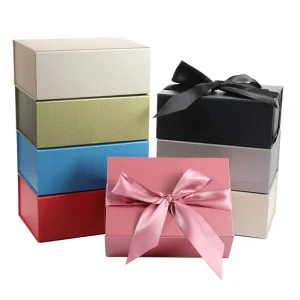
Rigid gift boxes, also known as set-up boxes, are pre-assembled containers that do not fold flat. They consist of a thick paperboard base wrapped with decorative paper, fabric, or leatherette. The core material is typically greyboard or chipboard with a density ranging from 800gsm to 2500gsm. Because the box arrives fully formed, it offers immediate structural integrity and a high-end tactile feel.
These boxes often feature magnetic closures, ribbon hinges, or lift-off lids. Their stiffness comes from the glued corners and the tight wrapping process. Unlike folding cartons, rigid boxes cannot be collapsed without damaging the structure. This makes them ideal for luxury items where presentation is paramount, but it also impacts storage and shipping efficiency.
In my experience working with a Swiss watch accessory brand, the rigid box became part of the product itself. Customers reused the box for storing small valuables, which extended brand visibility far beyond the initial purchase. That kind of longevity is a unique selling point of rigid construction.
Definition and Structure of Folding Paper Cartons
Folding paper cartons are manufactured from a single sheet of paperboard, typically solid bleached sulfate (SBS) or coated unbleached kraft (CUK), ranging from 200gsm to 500gsm. They are die-cut, scored, and delivered flat. The end user or fulfillment center assembles them by folding along the creases and tucking or gluing the flaps.
This flat-shipping design dramatically reduces transportation volume and storage space. Folding cartons are the workhorse of the packaging industry, used for everything from cereal boxes to smartphone accessories. Their print surface is smooth and receptive to high-quality graphics, but the structural rigidity is limited compared to rigid set-up boxes.
Many e-commerce brands prefer folding cartons for their lightweight nature and lower dimensional weight charges. However, they require an assembly step, which can add labor costs if done manually at scale. Automated folding and gluing systems have become more accessible in 2026, closing the efficiency gap for high-volume operations.
Material and Construction: A Side-by-Side Comparison
The table below highlights the key material and construction differences that influence cost, durability, and design possibilities. Use this as a quick reference when discussing specifications with your packaging supplier.
| Feature | Rigid Gift Boxes | Folding Paper Cartons |
|---|---|---|
| Core Material | Greyboard/chipboard (800–2500gsm) | SBS, CUK, or recycled paperboard (200–500gsm) |
| Manufacturing Process | Cut, wrapped, and glued by hand or semi-automatic machines | Die-cut, scored, and delivered flat; assembled later |
| Shipping State | Fully assembled, cannot be flattened | Flat-packed, saves up to 80% space in transit |
| Weight | Heavy due to thick board and wrapping materials | Lightweight, ideal for minimizing shipping costs |
| Recyclability | Often mixed materials (paper + magnets/fabric); harder to recycle | Typically mono-material paperboard; widely recyclable |
| Customization Lead Time | 4–8 weeks due to manual wrapping and tooling | 2–4 weeks with digital printing and standard die-cutting |
These differences cascade into every other decision, from budget allocation to sustainability reporting. When evaluating options, remember that a rigid box’s weight and volume directly affect your carbon footprint, while a folding carton’s assembly requirement might influence your fulfillment workflow.
Typical Applications and Use Cases
Rigid gift boxes dominate the luxury sector. You’ll find them housing premium watches, high-end cosmetics, gourmet chocolates, and limited-edition sneakers. Their sturdy build communicates exclusivity and justifies a higher retail price. Many brands in the USA and Europe also use rigid boxes for corporate gifting and VIP client packaging because the unboxing moment becomes a shareable event on social media.
Folding cartons serve a broader market. They package pharmaceuticals, dry foods, consumer electronics, apparel, and subscription boxes. The ability to print vibrant, full-color graphics directly on the board makes them a versatile branding tool. For e-commerce, folding cartons often double as the shipping container itself, eliminating the need for an outer box.
In one project with a UK-based candle maker, we initially considered rigid boxes for their holiday collection. After analyzing their average order value ($28) and the fact that 70% of sales happened online, we switched to a heavy-duty folding carton with a soft-touch laminate. The result maintained a premium feel while keeping the per-unit packaging cost under $1.20. This balance is critical for mid-market brands looking to scale without eroding margins. For businesses also needing complementary packaging like premium paper bags , a consistent material and print approach across boxes and bags strengthens brand recognition at retail touchpoints.
How Do Costs Compare Between Rigid Gift Boxes and Folding Paper Cartons?
Upfront Manufacturing Costs: Rigid vs. Folding
Rigid boxes carry a higher unit price due to material thickness, manual labor, and the complexity of wrapping. A standard 8x8x3 inch rigid box with a magnetic closure might cost between $2.50 and $6.00 per unit at moderate volumes (1,000–5,000 units). The same dimensions in a folding carton with comparable print quality could range from $0.40 to $1.20 per unit. The labor-intensive nature of rigid box production—often requiring skilled workers to wrap and glue—means that automation has not reduced costs as significantly as it has for folding cartons.
Folding cartons benefit from high-speed die-cutting and gluing lines. Once the die is created, thousands of cartons can be produced per hour with minimal human intervention. This efficiency translates into lower per-unit costs, especially for runs above 10,000 units. However, the initial die-making fee applies to both formats, though rigid box tooling (molds, magnetic closure jigs) is typically more expensive.
Shipping and Storage: The Hidden Cost Advantage of Folding Cartons
One of the most overlooked cost factors is the cube utilization during freight. Rigid boxes ship fully assembled, meaning a container or pallet holds significantly fewer units compared to flat folding cartons. I recall a subscription box company that switched from folding cartons to rigid boxes without recalculating their dimensional weight. Their shipping costs jumped by 40% because the rigid boxes took up more space and couldn’t be nested efficiently. They ended up redesigning the packaging mid-year to a semi-rigid hybrid solution.
For international shipments from manufacturing hubs in Asia to the USA or Europe, the freight difference can be staggering. A 40-foot container might hold 50,000 flat folding cartons but only 15,000 assembled rigid boxes of similar external dimensions. This directly impacts the landed cost per unit and should be modeled early in the sourcing process. If your product is lightweight but bulky, the shipping cost can exceed the manufacturing cost for rigid options.
Long-Term ROI: Which Offers Better Value for Money?
Return on investment depends on your sales channel and brand positioning. A luxury skincare brand selling a $120 serum can easily absorb a $4 rigid box because the packaging elevates the perceived value and reduces return rates. In fact, studies by the Paper and Packaging Board indicate that 72% of consumers say packaging design influences their purchase decision. For high-margin products, the rigid box pays for itself through increased conversion and customer loyalty.
For fast-moving consumer goods or low-margin items, folding cartons deliver better ROI. The lower unit cost allows for higher profit retention or competitive pricing. Additionally, the reduced shipping weight can lower fulfillment costs, which is a recurring expense. Over a product’s lifecycle, the savings from folding cartons can be reinvested into marketing or product development. However, if your brand competes on unboxing experience—think influencer-driven markets—the rigid box’s marketing value may justify the premium.
Customization Costs: Minimum Orders, Tooling, and Waste
When I was sourcing for a boutique jewelry brand, the rigid box supplier quoted a tooling fee of $450 for a custom-shaped insert, with an MOQ of 1,000 units. For a similar design in a folding carton, the die-cutting charge was only $120 with an MOQ of 500. For a small business testing a new product line, the folding carton route saved them over 60% in upfront costs. Rigid box MOQs typically start at 500–1,000 units, while folding cartons can be produced in runs as low as 100–250 with digital printing.
Waste is another consideration. Rigid box production generates more offcuts and rejected units due to the manual wrapping process. Folding carton production, especially with modern digital presses, produces minimal waste and allows for on-demand printing. This aligns with the growing demand for sustainable manufacturing. Brands that prioritize eco-friendly practices often choose folding cartons made from recycled content and designed for easy recycling, which can also reduce waste disposal fees.
Which Option Provides Superior Aesthetics and Brand Perception?
Print Quality and Premium Finishing Options
Both rigid and folding boxes can achieve stunning print results, but the processes differ. Rigid boxes are typically wrapped with pre-printed paper sheets (litho-laminated), which allows for intricate details, metallic inks, and embossing without the limitations of direct board printing. The wrap can be changed without altering the box structure, making seasonal design updates easier. However, the wrap may show seams at corners if not expertly applied.
Folding cartons are printed directly on the paperboard using offset, flexo, or digital methods. The smooth surface of SBS board holds fine text and vibrant colors exceptionally well. In 2026, digital printing advancements have closed the quality gap, enabling high-definition graphics even on short runs. Finishing options like soft-touch coating, spot UV, foil stamping, and embossing are available for both formats. The key difference is that rigid boxes can incorporate fabric or leatherette wraps, which folding cartons cannot replicate.
Unboxing Experience: Creating a Lasting Impression
The unboxing experience has become a marketing channel of its own. Rigid boxes offer a slow, deliberate reveal—think of the magnetic lid lifting smoothly, the subtle scent of paper, and the satisfying weight. This sensory engagement triggers emotional connections and is highly shareable on platforms like TikTok and Instagram. Brands like Apple and Tiffany & Co. have built entire brand identities around the rigid box experience.
Folding cartons can also deliver a memorable unboxing if designed creatively. Inserts, tissue paper, and clever structural folds can surprise the customer. However, the inherently lighter and less substantial feel may not convey luxury. For direct-to-consumer brands targeting Gen Z and millennials, a well-designed folding carton with personalized messages and QR codes linking to digital content can still create buzz. The key is to align the unboxing with your brand story—minimalist brands often prefer clean folding cartons over ornate rigid boxes.
Perceived Value: How Packaging Influences Customer Perception
Multiple consumer studies confirm that packaging weight and rigidity directly correlate with perceived product quality. A 2025 survey by Dotcom Distribution found that 61% of consumers are more likely to repeat purchase if the product comes in premium packaging. Rigid boxes signal that the brand cares about every detail, which can reduce price sensitivity. This is why even mid-tier brands sometimes use rigid boxes for gift sets or limited editions.
Folding cartons, when executed with high-quality printing and finishes, can still project a premium image. Think of the minimalist cosmetic brands that use thick, matte-laminated folding cartons with gold foil accents. The perceived value comes from the design coherence rather than the structural heft. If your brand ethos is sustainability, a beautifully printed recycled folding carton can communicate eco-conscious luxury, which resonates strongly with European consumers in 2026.
Customization Flexibility: Shapes, Windows, and Inserts
Rigid boxes offer extensive customization in shape—round, hexagonal, pillow-shaped, and even multi-tiered designs are possible. The internal cavity can be fitted with custom die-cut foam, velvet, or satin inserts. This makes them ideal for products with multiple components, like gift sets or collector’s editions. The downside is that complex shapes increase tooling costs and lead times.
Folding cartons are limited by the folding geometry, but creative die-cutting can produce unique shapes, pop-up elements, and integrated windows. PVC or bio-based clear windows are commonly used to showcase the product inside. Inserts can be added as separate components, but they lack the integrated luxury feel of a rigid box’s built-in tray. For brands offering customized kraft paper bags alongside their boxes, matching the design language across both formats creates a cohesive unboxing suite that delights customers at every touchpoint.
How Do Structural Strength and Durability Compare?
Stacking Strength and Product Protection
Rigid boxes excel in stacking strength. The thick greyboard walls can support significant weight without deforming, making them suitable for heavy items like glass bottles, ceramics, or multiple products bundled together. A well-constructed rigid box can withstand 50–80 lbs of top pressure, depending on size and wall thickness. This protects the contents during retail display and home storage.
Folding cartons have limited stacking capacity. The paperboard can buckle under excessive weight, especially in humid conditions. For lightweight products, they provide adequate protection, but for fragile or heavy items, you may need to add internal dividers or use a higher caliper board. The corrugated industry often steps in when folding cartons cannot meet the strength requirements, but that adds bulk and cost.
Resistance to Moisture, Tearing, and Crushing
The wrapped surface of a rigid box offers some moisture resistance, but the underlying greyboard is not waterproof. Prolonged exposure to humidity can cause warping or delamination of the wrap. Folding cartons, particularly those made from CUK or with aqueous coatings, have better inherent moisture resistance. However, their thinner walls are more prone to tearing and crushing during transit.
For e-commerce shipments, the outer shipping box provides the primary protection. The inner packaging (rigid or folding) must survive the journey without being crushed. Rigid boxes often double as the shipping container for high-value items, with just an outer poly mailer or minimal corrugated overpack. Folding cartons almost always require a secondary corrugated box unless the product is very robust. This adds to the total packaging cost but ensures the folding carton arrives in pristine condition.
Suitability for Heavy or Fragile Items
If your product weighs more than 2–3 lbs, a rigid box is the safer choice. I learned this lesson when a client shipped ceramic mugs in a folding carton with only bubble wrap. The cartons arrived crushed, and the breakage rate exceeded 15%. Switching to a rigid box with a foam insert eliminated the damage and reduced customer complaints to zero. The upfront cost increase was offset by the savings in replacements and negative reviews.
For electronics, rigid boxes provide the necessary protection against impact and vibration. Many laptop and smartphone manufacturers use rigid boxes with precision-cut foam to cradle the device. Folding cartons are better suited for accessories like cables, cases, or lightweight gadgets. The rule of thumb: if the product’s fragility can compromise customer satisfaction, invest in rigid packaging.
Longevity: Keepsake Rigid Boxes vs. Disposable Cartons
One of the unique advantages of rigid boxes is their reusability. Customers often keep them for storage, organization, or regifting. This extended lifespan keeps your brand in the consumer’s environment for months or years. A jewelry box, for example, may sit on a dresser and be seen daily. This passive advertising is impossible to quantify but highly valuable.
Folding cartons are typically single-use. They are recycled or discarded after the product is opened. While this aligns with circular economy principles, it means the brand touchpoint ends quickly. Some brands combat this by designing folding cartons that can be repurposed—like a carton that transforms into a phone stand or a storage tray. These creative approaches can partially mimic the keepsake effect of rigid boxes.
How to Choose Between Rigid and Folding Boxes: A Step-by-Step Guide
Step 1: Assess Your Product’s Weight, Size, and Fragility
Begin by listing the physical requirements of your product. Measure the dimensions and weight, and note any fragile components. If the product is heavy or delicate, rigid boxes should be your default starting point. For lightweight, durable items, folding cartons can perform well. Don’t forget to consider how the product will be shipped—will it be palletized, dropped, or exposed to temperature changes? These factors influence the necessary crush resistance.
Create a simple scorecard: assign points for weight, fragility, and value. If the total exceeds a threshold you set, rigid is likely the answer. This removes emotion from the decision and grounds it in engineering realities. Many startups skip this step and choose based on aesthetics alone, leading to costly returns.
Step 2: Align Packaging with Your Brand Identity and Budget
Your packaging is a physical manifestation of your brand promise. A luxury brand using flimsy folding cartons will confuse customers and dilute brand equity. Conversely, an eco-friendly brand using excessive rigid packaging may face backlash for being wasteful. Define your brand’s core values—premium, sustainable, minimal, playful—and let those guide the format choice.
Budget allocation matters. A common guideline is that packaging should cost between 5–10% of the product’s retail price. For a $50 product, a $2.50–$5.00 packaging budget is reasonable. Rigid boxes often fall in the upper end of that range, while folding cartons can meet the lower end. If your budget is tight, focus on exceptional graphic design and finishings for a folding carton rather than forcing a rigid box with mediocre print.
Step 3: Evaluate Sustainability and Eco-Friendliness
Sustainability is no longer optional, especially in European markets where regulations like the EU Packaging and Packaging Waste Directive are tightening. Rigid boxes often contain mixed materials (magnetic closures, fabric wraps, foam inserts) that complicate recycling. However, some manufacturers now offer mono-material rigid boxes using paper-based magnets and water-based adhesives. Ask your supplier for a recyclability certificate.
Folding cartons are inherently more sustainable due to their mono-material nature and flat shipping efficiency, which reduces carbon emissions. Look for FSC-certified board and soy-based inks. In 2026, many brands are switching to printed paper bags wholesale and folding cartons made from agricultural waste fibers, further lowering their environmental impact. If sustainability is a key part of your brand story, folding cartons offer a clearer, more communicable eco-benefit.
Step 4: Order Samples and Prototype Testing Best Practices
Never skip the sampling phase. In early 2025, a client of mine who produces organic teas decided to skip the sampling phase for a rigid box design. They approved the digital proof and went straight to bulk production. When the shipment arrived, the magnetic closure was too weak to hold the lid securely. We had to reorder an entire batch, delaying their holiday launch by three weeks. This taught us that physical prototypes are non-negotiable, especially for rigid structures.
When ordering samples, request both a production sample (to check materials and workmanship) and a shipping test sample (to simulate transit conditions). For folding cartons, assemble a few units yourself to gauge ease of assembly and consistency. Drop tests, vibration tests, and environmental chamber tests can reveal weaknesses that digital proofs hide. Invest $200–$500 in comprehensive testing—it’s far cheaper than a recall or bad batch.
What Are the Common Mistakes to Avoid When Selecting Paper Gift Boxes?
Over-Specifying Rigid Boxes for Low-Cost Items
One of the most frequent errors I see is using rigid boxes for products with a retail price under $20. The packaging cost eats into margins so deeply that the business becomes unprofitable at scale. A $15 candle in a $3 rigid box leaves little room for profit after manufacturing, marketing, and distribution. In such cases, a thick folding carton with a matte finish and gold foil can deliver 80% of the perceived luxury at a third of the cost.
Analyze your unit economics carefully. If the rigid box pushes your total cost of goods above 30% of retail, it’s a red flag. Consider using rigid boxes only for gift sets or seasonal editions where the higher price point absorbs the cost. For the standard line, invest in a premium folding carton that still stands out on the shelf.
Ignoring Shipping and Storage Implications
As mentioned earlier, the dimensional weight of rigid boxes can silently drain your logistics budget. Many brands focus solely on the ex-factory price and forget that shipping assembled boxes across continents costs more than the boxes themselves. I once consulted for a brand that imported rigid boxes from China to the US. The freight cost per unit was $1.80, nearly matching the manufacturing cost. By redesigning the box to a semi-rigid, flat-packed structure, they cut shipping costs by 60%.
Storage is another issue. Rigid boxes consume valuable warehouse space. If you hold inventory for multiple SKUs, the cubic footage can become unmanageable. Folding cartons stored flat require a fraction of the space, freeing up capital for other inventory. Always calculate the total landed cost, including freight, duties, and warehousing, before making a decision.
Sacrificing Structural Integrity for Aesthetics
A beautiful box that collapses during shipping is worse than a plain box that protects the product. I’ve seen brands choose ultra-thin folding cartons to save a few cents, only to face a wave of negative reviews because the box arrived dented. The brand damage far outweighs the packaging savings. Ensure that the board caliper and flute (if using corrugated) are appropriate for the product weight and shipping method.
For rigid boxes, the weak points are often the hinges and closures. A poorly attached magnetic closure can detach, or a ribbon hinge can fray. During prototyping, stress-test these elements by opening and closing the box 50–100 times. If it fails, work with the supplier to reinforce the design. Durability should never be traded for a sleek look.
Not Vetting Suppliers for Quality and Consistency
The packaging industry is global, and quality varies dramatically. A low-cost supplier might use recycled greyboard with inconsistent density, leading to warping or weak corners. Always request references, visit the factory (or hire an inspection agent), and check certifications like ISO 9001, FSC, and BRC (for food contact). In 2026, many reputable suppliers offer virtual factory tours via live video, which can save travel costs.
Consistency across production runs is critical. A slight variation in wrap color or board thickness can make your packaging look amateurish. Establish a quality control checklist that includes color delta values (ΔE < 2), glue adhesion tests, and dimensional tolerances. For large orders, consider third-party inspection during production and before shipment. This upfront diligence prevents costly disputes and stockouts.
What Are the 2026 Trends in Rigid and Folding Paper Packaging?
Sustainable Materials and Circular Economy Initiatives
The shift toward circular economy models is accelerating. In 2026, we’re seeing a surge in rigid boxes made from 100% post-consumer recycled greyboard and wrapped with uncoated, compostable papers. Brands are eliminating magnetic closures in favor of paper-based locking mechanisms or reusable fabric ties. The goal is to create a rigid box that can be recycled in a single stream without disassembly.
For folding cartons, the trend is toward lightweighting—reducing board caliper without sacrificing strength through advanced fiber engineering. Agricultural waste fibers from wheat straw, sugarcane bagasse, and hemp are entering the mainstream, offering a lower carbon footprint than virgin wood pulp. Water-based barriers are replacing plastic coatings, making the cartons fully repulpable. These innovations help brands comply with the EU’s Single-Use Plastics Directive and appeal to eco-conscious consumers.
Smart Packaging: Integrating QR Codes, NFC, and AR
Packaging is becoming a digital gateway. QR codes printed on rigid boxes or folding cartons link to augmented reality experiences, authenticity verification, or personalized video messages. NFC chips embedded under the wrap of a rigid box enable tap-to-connect functionality for luxury goods, providing a seamless brand experience. The cost of NFC tags has dropped to under $0.15 in high volumes, making them accessible for mid-tier products.
Folding cartons benefit from variable data printing, allowing each box to carry a unique code for traceability or gamified loyalty programs. In the pharmaceutical sector, smart folding cartons track adherence through connected apps. For consumer brands, this technology turns a disposable carton into a persistent digital touchpoint, extending customer engagement long after the unboxing.
Minimalist Design and Premium Unboxing Trends
Minimalism continues to dominate, but with a twist: texture over print. Rigid boxes in 2026 often feature uncoated, heavily textured papers that invite touch. Blind embossing and debossing create subtle, elegant branding without ink. The unboxing experience focuses on the sound and feel of the box opening—a quiet, smooth reveal rather than flashy colors. This aligns with the “quiet luxury” trend prevalent in fashion and home decor.
Folding cartons are embracing minimalist design through clean typography, ample white space, and single-color printing with a spot varnish. The structural design itself becomes the differentiator—think of cartons that open like a book or reveal the product through a die-cut window as the box is unfolded. The goal is to create a moment of delight without excess material, resonating with consumers who value experiences over possessions.
Automation in Folding Carton Assembly and Fulfillment
Labor shortages and rising wages are driving automation in packaging assembly. In 2026, compact carton erecting machines are affordable for mid-sized e-commerce fulfillment centers. These machines can fold and glue cartons at speeds of 20–40 per minute, eliminating manual assembly bottlenecks. This trend narrows the operational gap between rigid boxes (which arrive ready) and folding cartons (which require assembly).
For rigid boxes, automation remains challenging due to the manual wrapping process. However, robotic arms are increasingly used for palletizing and quality inspection. The industry is exploring 3D-printed greyboard cores that can be formed without manual gluing, but this technology is still in the R&D phase. The key takeaway: if your fulfillment operation struggles with labor, factor in the assembly cost when comparing folding and rigid options.
What Tools and Resources Can Help You Design and Source Paper Boxes?
Online 3D Box Design Tools and Templates
Several platforms now offer browser-based 3D packaging design. Esko’s Studio Toolkit and Packhelp’s online designer let you create dielines, apply graphics, and visualize the box in 3D without installing software. These tools export print-ready files and even generate 3D renders for e-commerce product pages. For rigid boxes, some suppliers provide parametric templates where you input dimensions and get a 3D preview of the wrapped box.
Free resources like the FEFCO code library provide standard folding carton styles that you can adapt. Using these templates reduces design time and ensures compatibility with automated filling lines. I recommend starting with a standard style and only customizing if your product truly requires it—custom dies add cost and lead time.
Supplier Directories and B2B Marketplaces
Finding reliable suppliers is easier with curated directories. ThomasNet (USA), Europages (Europe), and Alibaba’s verified supplier program connect you with audited manufacturers. For rigid boxes, look for suppliers specializing in “set-up boxes” or “rigid gift boxes.” For folding cartons, search for “printed folding cartons” or “SBS carton manufacturers.” Always filter by certifications and minimum order quantities that match your needs.
In 2026, niche B2B platforms like Packwire and noissue offer low-MOQ, digitally printed folding cartons with fast turnaround. These are ideal for startups testing the market. For larger volumes, attending trade shows (see below) remains the best way to build relationships and negotiate pricing.
Cost Calculators and Material Selection Guides
Accurate cost estimation prevents budget overruns. The Paperboard Packaging Council offers a free cost model spreadsheet that factors in board price, tooling, printing, and freight. Some supplier websites have instant quote engines where you upload a dieline and get a price within 24 hours. Use these tools to compare rigid vs. folding costs side by side before committing to a design direction.
Material selection guides from board mills like WestRock and Metsä Board help you choose the right caliper and coating for your product’s needs. They provide technical data on stiffness, tear resistance, and printability. Armed with this data, you can have more productive conversations with suppliers and avoid being upsold on unnecessary specs.
Industry Trade Shows and Associations to Watch in 2026
Attending trade shows gives you hands-on exposure to the latest materials and machinery. Key events in 2026 include:
- Pack Expo International (Chicago, USA) – October 2026
- Interpack (Düsseldorf, Germany) – May 2026
- Luxe Pack (Monaco and New York) – dedicated to luxury packaging
- FEFCO Technical Seminar – for corrugated and folding carton innovations
These events offer seminars on sustainability, digital printing, and smart packaging. They are also excellent opportunities to meet potential suppliers face-to-face and negotiate directly.
Industry associations like the Flexible Packaging Association, Paperboard Packaging Council, and the Sustainable Packaging Coalition publish reports, host webinars, and provide networking opportunities. Membership can give you early access to regulatory changes and consumer trend data, keeping your packaging strategy ahead of the curve.
Ready to Elevate Your Packaging? Let’s Talk
Selecting between rigid gift boxes and folding paper cartons isn’t a one-size-fits-all decision. It requires balancing protection, perception, cost, and sustainability. Whether you’re launching a luxury skincare line or scaling an eco-friendly subscription service, the right packaging amplifies your brand’s voice and drives customer loyalty. At Fashionhome Paper, we specialize in both rigid and folding solutions, and we also offer a wide range of complementary products like premium paper bags , customized kraft paper bags , and printed paper bags wholesale to create a cohesive brand experience. Request a free consultation and sample kit today, and let’s build packaging that sells.
References and Further Reading
- Mordor Intelligence: Gift Packaging Market Report
- Smithers: The Future of Rigid Packaging to 2026
- Paperboard Packaging Council: Industry Resources
- Sustainable Packaging Coalition: Design Guidelines
- FEFCO: European Federation of Corrugated Board
- Dotcom Distribution: E-Commerce Packaging Study 2025
- </
Related Articles
- How Much Weight Can a Paper Bag Hold? A B2B Load and Handle Test Guide
- How to Test Box Compression Strength and Hinge Durability Before Bulk Shipment: Expert 2026 Guide for Importers
- The Complete Guide to Prototyping Custom Paper Boxes: Structural Design and Sample Lead Times – 2026 Professional Tips & Tricks
- How to Choose the Right Shopping Paper Bags for a Clothing Store
More resources: Paper Bag Buying Guides | News