+86 18367980672


 EN
 ES
 PT
 RU

Abstract
The noticeable decline in the use of handles on common paper bags, particularly in grocery and food service contexts, is not an arbitrary design choice but a calculated response to a confluence of economic, environmental, and operational pressures. An examination of this trend reveals four primary drivers shaping the 2025 packaging landscape. Firstly, the elimination of handles yields significant cost savings by reducing material inputs and streamlining the manufacturing process, which, when scaled across millions of units, represents substantial financial gains for businesses. Secondly, the move toward handleless designs simplifies the recycling and composting streams, enhancing the material’s value and reducing contamination. A single-material bag aligns better with the operational realities of modern recycling facilities. Thirdly, the rapid adoption of automation in packing and fulfillment centers favors the uniform, predictable shape of handleless bags, which are more easily manipulated by robotic systems. Finally, the specific function of the bag dictates its form; while handleless bags dominate high-volume sectors, handled bags retain their purpose in retail and specialty applications where branding and consumer convenience are paramount.
Key Takeaways
- Eliminating handles significantly cuts material and manufacturing costs for businesses.
- Handleless bags are simpler to recycle and compost, improving sustainability efforts.
- Automated packing systems in warehouses and stores operate more efficiently with simple bag designs.
- Understanding why don’t paper bags have handles anymore involves seeing it as a functional choice.
- Handles remain vital for luxury retail, branding, and carrying heavy specialty items.
- The rise of food delivery services has standardized the use of stable, handleless SOS bags.
Table of Contents
- The Economics of Omission: Unpacking the Cost of a Paper Bag Handle
- Purity in Process: How Handleless Bags Elevate Sustainability
- Designing for the Machine: Automation’s Role in the Handle’s Demise
- A Question of Purpose: Defending the Enduring Value of the Handled Bag
- Frequently Asked Questions
- Conclusion
- References
The Economics of Omission: Unpacking the Cost of a Paper Bag Handle
Have you ever found yourself at a grocery store or leaving a restaurant with a takeout order, juggling a wide, handleless paper bag in your arms? You might have wondered, almost reflexively, why don’t paper bags have handles anymore? It feels like a small inconvenience, a missing feature that was once standard. This observation, however, is not a sign of declining quality but a window into the intricate and deeply rational world of modern packaging logistics. The disappearance of the handle from many common paper bags is a deliberate and multifaceted business decision, driven by a powerful logic of cost efficiency that ripples through the entire supply chain, from the factory floor to the checkout counter. To truly understand this shift, we must adopt the perspective of a large-scale enterprise, where a fraction of a cent, when multiplied by millions, transforms into a significant operational variable.
The Anatomy of a Handle’s Cost
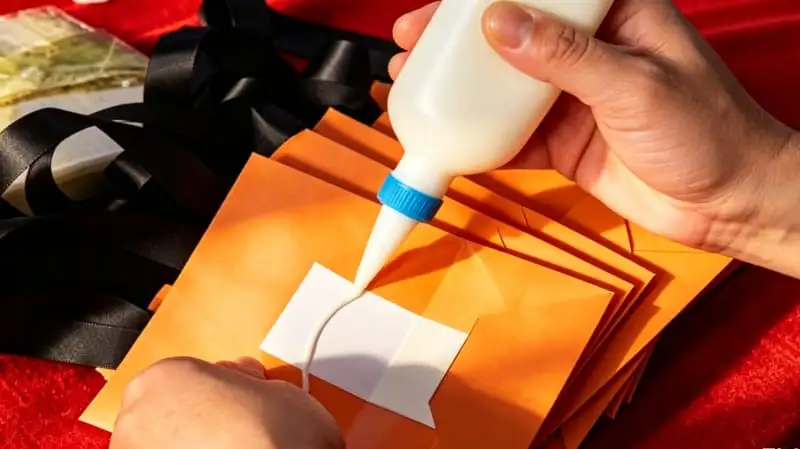
At first glance, a paper handle seems like a trivial addition. It is just a small strip of twisted paper, after all. Yet, in the world of mass production, nothing is without cost. The handle itself requires its own stream of raw materials—typically kraft paper, the same as the bag, but it is an additional quantity of that material. Adhesives are also required to affix the handle securely to the bag’s body, strong enough to withstand the weight of the contents. While the cost of the paper and glue for a single handle might be minuscule, perhaps only a cent or two, the scale of modern retail operations amplifies this expense into a formidable figure.
Consider a national grocery chain that uses, hypothetically, 500 million paper bags annually. A saving of just $0.02 per bag by omitting the handle translates into an annual cost reduction of $10 million. This is not a trivial sum; it is capital that can be reinvested into other areas of the business, passed on to consumers through lower prices, or reflected in shareholder returns. The decision ceases to be about a minor convenience and becomes a strategic financial choice. This economic pressure is a primary force behind the prevalence of handleless designs in high-volume sectors like grocery stores and fast-food chains.
| Feature | Handled Paper Bag | Handleless Paper Bag (SOS Bag) |
|---|---|---|
| Manufacturing Complexity | High (Multi-step: bag formation, handle creation, handle attachment) | Low (Single-step: bag formation) |
| Material Cost per Unit | Higher (Bag + Handle Material + Extra Adhesive) | Lower (Bag Material Only) |
| Production Speed | Slower (Additional mechanical steps for handle attachment) | Faster (Streamlined, continuous process) |
| Storage & Shipping Density | Lower (Handles create uneven stacking and bulk) | Higher (Bags lie perfectly flat and compact) |
| Automation Compatibility | Moderate to Low (Handles can snag or misalign in machinery) | High (Uniform shape is ideal for robotic packers) |
| Recycling Simplicity | Moderate (Adhesives and handle can be contaminants) | High (Single, homogenous material) |
The Price of Complexity in Manufacturing
Beyond the direct cost of materials, the manufacturing process for a handled bag is inherently more complex, and complexity carries its own price tag in terms of time and machinery. A machine that produces a simple, handleless Self-Opening Sack (SOS) bag is a marvel of efficiency. It performs a continuous, high-speed sequence of folding, cutting, and gluing a single roll of paper into a finished product.
Introducing a handle requires a significant addition to this process. A separate mechanical system must be integrated to twist the paper into a cord, cut it to length, and then precisely apply it to the bag body with a patch of reinforcing paper and adhesive. This additional step slows down the entire production line. If a handleless bag machine can produce 500 units per minute, a handled bag machine might only produce 300. This reduction in throughput means that to meet the same demand, a manufacturer needs to run the machinery for longer hours, invest in more machines, or accept a lower output, all of which increase the cost per bag. The machinery itself is more expensive to build, maintain, and operate due to its greater complexity and number of moving parts.
The Unseen Costs: Logistics and Storage
The economic impact of the handle extends even beyond the factory. Think about how paper bags are shipped and stored: flat-packed in boxes on pallets. A stack of handleless bags is perfectly uniform and dense. A thousand bags might create a neat, compact stack of a certain height.
Now, introduce a twisted paper handle. Even when flattened, the handles create bulk. They prevent the bags from lying perfectly flush against one another. This means that a box of the same dimensions can hold fewer handled bags than handleless ones. The stack is less stable, and the overall volume per unit increases. This inefficiency cascades through logistics. Fewer bags fit into a shipping container, meaning more containers are needed to transport the same number of units. Fewer bags fit onto a pallet, meaning more warehouse space is required for storage. Every step of the journey, from the manufacturer’s warehouse to the back room of a retail store, becomes marginally less efficient and therefore more expensive. The handleless bag, by its very nature, is optimized for the spatial economy that governs modern logistics.
Purity in Process: How Handleless Bags Elevate Sustainability
The global conversation around sustainability has matured significantly. It has moved beyond simple declarations of being “green” toward a more nuanced understanding of what makes a product genuinely sustainable throughout its entire lifecycle. This includes not just its origin but its end-of-life. In this context, the shift away from handled paper bags is also a sophisticated environmental strategy. While a paper bag is often seen as a virtuous alternative to plastic, its true recyclability and compostability can be compromised by its design. The simple, handleless bag represents a move toward material purity, a characteristic that is highly valued in the industrial processes of recycling and composting.
The Recycling Stream and the Problem of Contamination
To appreciate why handleless bags are superior for recycling, one must first visualize the journey of a used paper bag. It is collected, transported to a Material Recovery Facility (MRF), and sorted. At the MRF, it is baled with other paper products and sent to a paper mill. There, it is put into a giant vat called a pulper, where it is mixed with water and chemicals to break it down into a slurry of paper fibers. This pulp is then cleaned, de-inked, and reformed into new paper products.
The handle, especially the common twisted-paper variety, introduces a point of contamination in this process. The primary issue is the adhesive used to attach the handle to the bag. These glues are designed to be strong and are often not water-soluble. In the pulping process, they do not break down along with the paper fibers. Instead, they can become small, sticky particles known as “stickies.” These stickies can cling to the paper-making machinery, causing tears and holes in the new paper sheets and leading to costly operational shutdowns for cleaning. They can also blemish the final recycled product, reducing its quality and value (Goodstart Packaging, 2025). While modern mills have systems to screen out contaminants, they are not perfect, and reducing the introduction of contaminants at the source is always the preferred approach. A handleless bag is a “cleaner” input for the recycling system.
Enhancing Compostability Through Simplicity
Similar principles apply to composting. For a material to be certified as commercially compostable, it must break down within a specific timeframe (typically 90-180 days) into non-toxic components. A simple, uncoated kraft paper bag does this beautifully. It is, after all, just wood fiber. Many plain brown paper bags, such as the handleless SOS bags used for groceries and takeout, are BPI Certified Compostable.
The addition of handles complicates this. The heavy concentration of glue used to secure the handles may not break down at the same rate as the paper fibers. While many modern adhesives are designed to be more eco-friendly, they can still alter the decomposition profile of the product. Furthermore, some luxury paper gift bags use handles made of different materials entirely, such as woven rope (polypropylene), satin ribbon, or even plastic tubes. These are significant contaminants in a compost stream and would need to be manually removed by the consumer before composting—an action that often does not happen. By eliminating the handle, the bag becomes a homogenous material, its path to decomposition straightforward and unhindered.
| Bag Type | Primary Material | Common Handle Type | Key Recycling/Composting Challenge |
|---|---|---|---|
| Handleless SOS Bag | Kraft Paper | None | None; a single, pure material stream. |
| Kraft Bag with Paper Handles | Kraft Paper | Twisted or Flat Paper | The adhesive used to attach the handle can create “stickies” that contaminate the pulp. |
| Laminated Retail Bag | Paper with Plastic Film | Rope (e.g., Polypropylene) | The plastic laminate makes it non-recyclable and non-compostable. The plastic handle is also a contaminant. |
| Paper Gift Bag | Art Paper, Cardstock | Ribbon (e.g., Polyester) | The ribbon is a non-paper contaminant that must be removed. Dyes and coatings can also be an issue. |
Designing for Human Behavior
A final, pragmatic aspect of sustainable design involves anticipating human behavior. An environmentally conscious consumer may diligently place their paper bag in the recycling bin. However, will they remember to tear off the handles first? The reality is that most people will not. This is not due to malice but simply a lack of awareness about the technical requirements of the recycling process. This phenomenon, sometimes called “wish-cycling,” involves placing items in the recycling bin hoping they can be recycled, even if they contain contaminating elements.
Product designers and businesses are increasingly recognizing that the most effective way to ensure a product is properly recycled is to design it in a way that requires no special action from the consumer. A handleless bag is a perfect example of this principle. There is nothing to remove, nothing to separate. The entire object can be placed directly into the paper recycling stream. This simple design choice removes a potential point of failure and significantly increases the probability that the paper fibers will successfully complete their journey to become a new product, which is the ultimate goal of recycling.
Designing for the Machine: Automation’s Role in the Handle’s Demise
The landscape of commerce in 2025 is increasingly shaped by forces unseen by the consumer. Behind the website interface and the retail storefront lies a vast and complex network of warehouses, fulfillment centers, and logistics hubs powered by ever-more-sophisticated automation. In this world, efficiency is measured in seconds, and reliability is paramount. The physical characteristics of every item, including packaging, are scrutinized for their compatibility with robotic systems. It is within this context that we find another powerful reason for the decline of the paper bag handle: handleless bags are simply better suited for a world of automated labor.
The Logic of the Robotic Gripper
Imagine a robot on an assembly line tasked with packing online orders. A common type of robot uses suction cup grippers to pick up items. To pick up a paper bag, the robot needs a flat, predictable surface to create a secure vacuum seal. A stack of handleless bags provides exactly that—a perfectly flat plane. The robot can descend, pick up a single bag from the top of thestack with flawless repetition, and proceed to the next step.
Now, introduce a handled bag. The twisted handles create an uneven surface. The suction cups might land on a handle, failing to create a seal. The handle could snag on the robotic arm during the lifting motion, causing a jam. The bags might not be perfectly aligned in the stack due to the bulk of the handles, leading the robot to misjudge the pickup point. Each of these potential failures results in an error that could halt the entire packing line, requiring human intervention and causing costly downtime. In a facility processing thousands of orders per hour, such inefficiencies are unacceptable. The simple, uniform geometry of the handleless bag makes it an ideal component for a seamless, automated workflow.
The High-Velocity World of Food Delivery
The explosive growth of food delivery services like DoorDash, Grubhub, and Uber Eats has profoundly reshaped the restaurant industry, and with it, its packaging needs. The standard packaging for takeout orders has overwhelmingly become the handleless SOS bag. Why is this? The answer lies in the specific demands of this ecosystem.
First, speed is of the essence. During a dinner rush, a restaurant needs to assemble and pack orders as quickly as possible. The wide-mouthed, flat-bottomed SOS bag stands open on its own, allowing a worker to quickly and efficiently place multiple food containers inside. There is no need to fuss with flimsy handles or a bag that will not stay upright.
Second, stability is crucial. The packed bag must be secure for transport. The rectangular footprint of the SOS bag provides a stable base. When sealed (often by folding over the top and securing with a sticker), it creates a compact, sturdy block. This shape is perfect for stacking multiple orders inside a delivery driver’s insulated carrier bag. Handles would get in the way of a secure seal. They could also catch on other items, potentially tipping the bag and causing spills. The handleless design prioritizes the integrity and security of the food during its journey from the restaurant to the customer’s doorstep. In this context, the handle is not just unnecessary; it is a liability.
The Automated Grocery Store
The trend extends to the grocery sector, which is also embracing automation. From “dark stores” that are essentially fulfillment centers for online grocery orders to the proliferation of self-checkout stations, the process of bagging groceries is being re-engineered for efficiency. Automated bagging systems, which are beginning to appear in various forms, are designed around the simplest possible components. A system that can grab a handleless bag, pop it open, and present it for filling is far simpler and more reliable to design and implement than one that must account for the variability and potential for snags introduced by handles. As retailers continue to invest in technology to streamline operations and manage labor costs, packaging that is “robot-friendly” will become the default, not the exception. The humble handleless paper bag is, in this sense, a piece of future-proof design.
A Question of Purpose: Defending the Enduring Value of the Handled Bag
After exploring the compelling economic, environmental, and operational reasons for the move toward handleless bags, one might be tempted to declare the handle obsolete, a relic of a less efficient past. This conclusion, however, would be premature. The reality is more nuanced. The handle has not disappeared; rather, its application has become more specialized. The question to ask is not if a bag should have a handle, but why. In many contexts, the handle remains not just relevant but indispensable, serving crucial functions related to branding, convenience, and the specific requirements of the product it is designed to carry. In these cases, the handle is not an extraneous feature but an integral part of the product’s value proposition.
The Handled Bag as a Brand Ambassador
Step away from the high-volume, low-margin world of groceries and fast food, and enter the realm of boutique retail. Here, the shopping bag is more than just a container; it is a statement. It is the final touchpoint in the customer’s shopping experience and a mobile advertisement for the brand once it leaves the store. In this context, a well-designed handled bag is a powerful branding tool. The choice of material, the quality of the print, and, yes, the style and feel of the handle all contribute to the consumer’s perception of the brand’s quality and prestige.
A sturdy, comfortable handle conveys a sense of luxury and care. Think of the thick, soft rope handles on a bag from a high-end department store or the custom-dyed ribbon handles on elegant paper gift bags. These elements are chosen with the same care as the products inside. They create a tactile experience that reinforces the brand’s identity. For these businesses, the additional cost of a handle is not an expense but an investment in marketing and customer experience. The convenience of being able to carry purchases easily and comfortably is part of the premium service they offer.
When Functionality Demands a Handle: Wine and Weight
Certain products, by their very nature, demand a handled carrier. The classic example is a bottle of wine. A tall, narrow, and relatively heavy glass bottle is awkward and precarious to carry in a standard grocery bag. The paper wine bag is a piece of purpose-built engineering. It is designed to hold the bottle securely in an upright position, and its handles are reinforced to reliably support the weight. The handle is not an option; it is the core feature that makes the bag functional. Without it, the product would be almost useless.
This principle extends to other heavy or bulky items. A customer purchasing a large sweater, a pair of boots, or multiple books expects a bag that can be carried securely and comfortably by a handle. For businesses selling such goods, providing a robust handled bag is a matter of practicality and customer service. Investing in paper bags with handles bulk is a standard operational necessity. The handle provides a secure grip and distributes the weight, making the customer’s journey from the store to their home a pleasant one. In these scenarios, a handleless bag would be a frustrating and impractical choice, reflecting poorly on the retailer.
The Middle Ground: The Humble Kraft Bag with a Flat Handle
There exists a middle ground between the handleless SOS bag and the luxury retail carrier: the ubiquitous paper kraft bags with simple, flat paper handles. You often see these at casual eateries, bakeries, or small shops. This design represents a carefully struck compromise between cost and convenience.
The flat handle, which is essentially a folded strip of paper glued to the inside of the bag, is less expensive to produce and attach than the twisted paper cord handle. It also lies flatter, making the bags more efficient to pack and ship than their twisted-handle counterparts. While it does not offer the same comfortable grip or luxury feel as a rope handle, it provides a significant functional advantage over no handle at all, especially if the customer is carrying the bag for more than a short distance. It allows for a one-handed carry, freeing up the other hand to open doors, hold a phone, or manage keys. This design demonstrates that the decision to include a handle is a spectrum of choices, where businesses weigh cost, branding, and customer convenience to find the solution that best fits their specific operational needs and market position.
Frequently Asked Questions
So, are paper bags with handles bad for the environment?
Not inherently, but they are more complex from a recycling perspective. The main issue is the adhesive used to attach the handles, which can contaminate the paper pulp during recycling. Luxury bags with plastic or fabric handles are more problematic, as these non-paper components must be removed. A simple, handleless bag is the most “pure” and easiest to recycle.
Why do some grocery stores still use bags with handles?
This often comes down to regional preferences, specific store branding, or legacy supply chain agreements. Some stores may find that their customers strongly prefer handles and are willing to absorb the extra cost as a customer service measure. Others may use bags with integrated, die-cut handles, which are part of the bag itself and avoid the issue of glued-on parts.
What exactly is an “SOS” bag?
SOS stands for “Self-Opening Sack.” It is the technical term for the flat-bottomed paper bags, typically without handles, that are common in grocery stores and for food takeout. Their key design feature is that they can stand upright on their own, making them easy to pack.
Can I add my own handles to a handleless paper bag?
While you technically could, it is generally not practical. The bag is not designed to support weight from two small points where a handle would be attached. The paper could easily tear. Bags designed for handles have an extra layer of reinforcing paper where the handle is glued on to distribute the load.
Why don’t paper bags have handles anymore for takeout food specifically?
The primary reasons are speed, stability, and security. Handleless SOS bags are faster for restaurant staff to pack during busy periods. Their stable, flat bottom prevents tipping, and folding over the top to seal the bag is easier without handles in the way. This creates a secure, compact package ideal for transport by a delivery driver.
Are handleless bags cheaper for consumers?
The cost savings from using handleless bags are realized by the business (the retailer or restaurant). Whether these savings are passed on to the consumer in the form of lower prices is a complex question of market dynamics. However, the lower operational cost for the business helps keep overall prices from rising as much as they otherwise might.
Where can I buy specialty paper bags with handles for my business?
For businesses that require the branding and functional benefits of handles, numerous manufacturers specialize in these products. You can source a wide variety of options, from custom-printed retail bags to specialized carriers like paper wine bags, from dedicated packaging suppliers who cater to these specific market needs.
Conclusion
The question of why many paper bags no longer have handles opens a door to understanding the deeply interconnected nature of modern commerce. The trend is not a sign of thoughtless cost-cutting but a sophisticated response to a web of factors. The economic logic is undeniable; in a game of massive scale, small savings per unit translate into millions. The environmental argument is equally compelling, as the handleless design represents a move toward material purity that simplifies and enhances the efficacy of recycling and composting systems. Furthermore, the relentless march of automation in logistics and retail favors the simple, predictable form of the handleless bag, a shape designed as much for the robotic gripper as for the human hand.
However, this evolution does not spell the end of the handle. It clarifies its purpose. In the world of retail, the handle endures as a vital tool for branding and a tangible expression of customer care. For carrying specific items, it remains a functional necessity. The story of the paper bag handle is a perfect illustration of how design evolves. It is a process of specialization, where form follows not just function, but also finance, factory automation, and future-friendliness. The next time you carry a handleless bag, you can appreciate it not for what it lacks, but for the complex web of efficiencies it represents.
References
Creative Bag. (2025). Wholesale eco friendly paper bags. Retrieved from
Goodstart Packaging. (2025). Recycled paper shopping bags | Kraft handle bags. Retrieved from https://www.goodstartpackaging.com/compostable-bags/recycled-paper
Guangzhou Cankim Co., Ltd. (2025). 2025 Paper Bag. Made-in-China.com. Retrieved from
Jialan Package. (2024). Wholesale paper gift bag manufacturers & suppliers. Retrieved from
Paper Bag. (2024). Paper bag. Retrieved from
PrintRunner. (2025). Recycled kraft paper bags – Custom shopping bags. Retrieved from
Weihua Packaging & Printing. (2025). Paper bag. Retrieved from
Related Articles
- How Much Weight Can a Paper Bag Hold? A B2B Load and Handle Test Guide
- How to Test Box Compression Strength and Hinge Durability Before Bulk Shipment: Expert 2026 Guide for Importers
- The Complete Guide to Prototyping Custom Paper Boxes: Structural Design and Sample Lead Times – 2026 Professional Tips & Tricks
- How to Choose the Right Shopping Paper Bags for a Clothing Store
More resources: Paper Bag Buying Guides | News